

Why do we remember brand names?
One could also ask: Why do we remember anything at all?
The short answer is: Because our brain always wants to conserve energy and we have to make tens of thousands of conscious and unconscious decisions every day that cost us energy.
Just imagine you couldn’t remember anything and had to make small and big decisions over and over again without being able to draw on past experiences or previously acquired knowledge. Every decision would cost you an enormous amount of time and energy, and your error rate would be extremely high. Strictly speaking, you probably wouldn’t be viable at all.
This trivial extreme example leads us to the actual purpose of brands, which is often completely ignored: Brands help us make decisions that hopefully meet our expectations and benefit us.
The reason we remember brand names is therefore primarily that it makes life enormously easier if we can rely on our decision leading to the expected result (and experience).
Because we know that Snickers tastes better than Mars and contains protein-rich peanuts, the allergy sufferer, the fitness enthusiast, and the connoisseur know what the right choice for him or her is at the shelf.
However, most people store not just one, but if possible several alternative brands in their minds in order to consider them as potential solutions at an appropriate time.
At the same time, the information stored in our brain is subject to constant decay, so not all brands are granted a place in our memory. How mentally available your brand is and how it is categorized or “positioned” by people therefore depends on the subjective perceptions and interpretations.
Your brand in the human brain
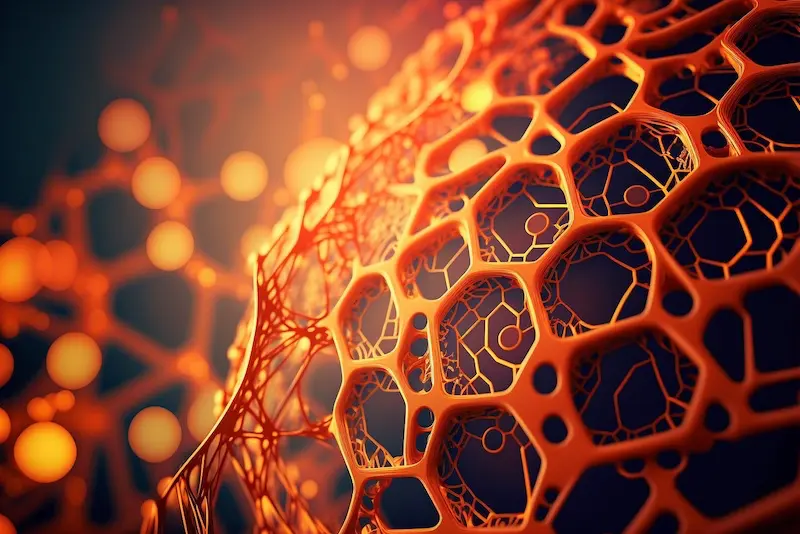
Every piece of information available to you in your memory can be imagined as a node in a larger network of ideas. All information nodes are connected to one another in a wide variety of ways.
New connections are formed, others become weaker or disappear entirely. Through our actions and experiences, new nodes and connections between nodes are added to the existing brain structures. Over the course of our lives, a highly flexible and dynamic memory structure develops, allowing us to access specific units of knowledge in our brain via different pathways (associations) and characteristics (attributes). And all of this in order to make decisions that either:
- spare us suffering (avoidance / displeasure)
- bring us joy (reward / pleasure)
Each retrieval represents an independent experience that influences and changes the content and interpretation of the memory and the knowledge retrieved.
Your brand identity is also (hopefully) anchored in the minds of certain people and thus part of their brain structures. The exact associations and attributes differ from person to person—sometimes more, sometimes less—yet there are similarities.
The more connections exist between the brand and the respective lifeworld of the person, the higher the chance that this person will remember the brand at the right moments, recommend it, and choose it at the moment of truth.
The more brain structures exist around the brand name, the higher the mental availability in relevant purchase and recommendation situations.
To build a strong brand and successfully market your offerings, it is essential to understand how we, as humans, feel, think, and act. Only through radical human and customer centricity can we shape our behavior and communication as effectively as possible and best serve the meaning and purpose of our company.
The more strongly your brand is available in the brain, the better it will be perceived
When we search for answers to our questions or solutions to our problems, we first look into our memory before asking other people or involving the internet in the decision-making process.
Every time we either:
- encounter the brand itself or
- encounter a situation
in which the brand would be helpful, the brain structures available at that moment and our awareness of them determine whether the brand “comes up” and whether it is perceived as relevant in the given context or not.
If your brand is mentally available to a person, or if the brand has achieved a certain position in someone’s memory, various triggers—such as a craving for chocolate or a conversation with a friend—can lead us to search for a suitable solution and choose exactly this brand. Mental availability is therefore something like the admission to competition. Physical availability—that is, the visibility and accessibility of the offerings—then determines which participating competitor wins the race. Which brand we ultimately choose.
The associations and attributes linked to different brands therefore help us in emotional-rational decision-making.